

People studying for their TAE40122 Certificate IV in Training and Assessment qualification will need to demonstrate that they can use qualification packaging rules. This is a requirement for the TAEDES411 Use nationally recognised training products to meet vocational training needs unit of competency.
This article covers:
- What are qualification packaging rules?
- How are the qualification packaging rules used?
What are qualification packaging rules?
Qualification packaging rules specifies the total number of units of competency required to achieve the qualification. Also, the number of core and elective units are specified. All core and elective unit codes and titles are listed, including identification where prerequisite units apply.
Each qualification has been designed to meet the needs of an occupation or job function. Packaging rules ensure that the selection of elective units achieve the desired outcomes for the qualification.
How are the qualification packaging rules used?
The following is a 7-step process for using the qualification packaging rules:
- Step 1. Access the qualification packaging rules
- Step 2. Read the qualification packaging rules
- Step 3. Create a Microsoft Word table
- Step 4. Insert the core units for the qualification
- Step 5. Select elective units according to the qualification packaging rules
- Step 6. Sequence the units of competency
- Step 7. Check compliance with qualification packaging rules
The following is a case study showing how to use the qualification packaging rules for the SIT20322 Certificate II in Hospitality qualification.
This qualification provides a pathway to work in various hospitality settings, such as restaurants, hotels, motels, catering operations, clubs, pubs, cafés, and coffee shops. For the purposes of this case study, I have focused on a training program for a worker in a café or coffee shop. The following is a brief job description for a café worker.
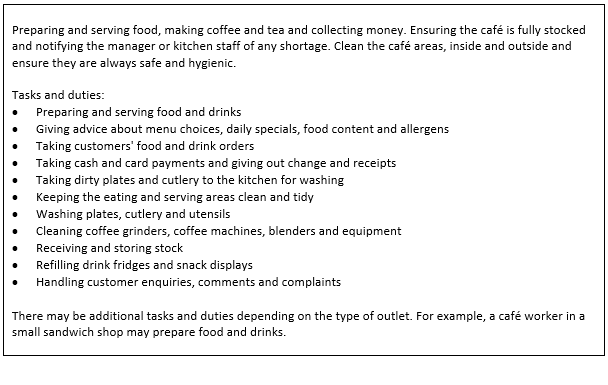
Step 1. Access the qualification packaging rules
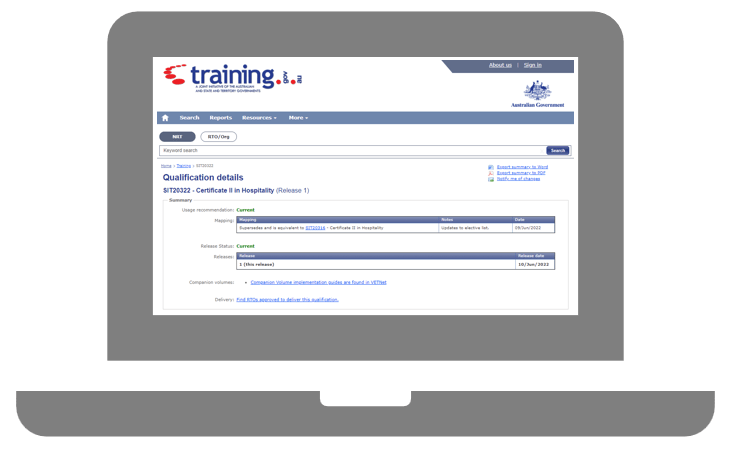
The training.gov.au website provides access to the packaging rule for the qualification. Use the search function to find the qualification details, and scroll down.
Step 2. Read the qualification packaging rules
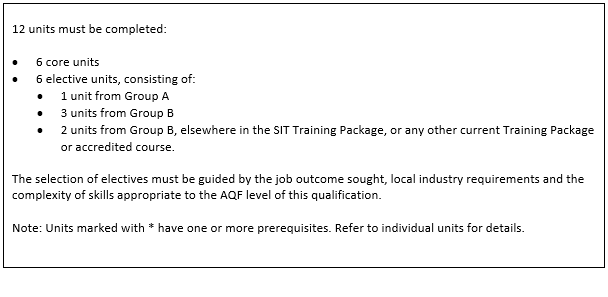
The following are the packaging rules for the SIT20322 Certificate II in Hospitality qualification.
Step 3. Create a Microsoft Word table
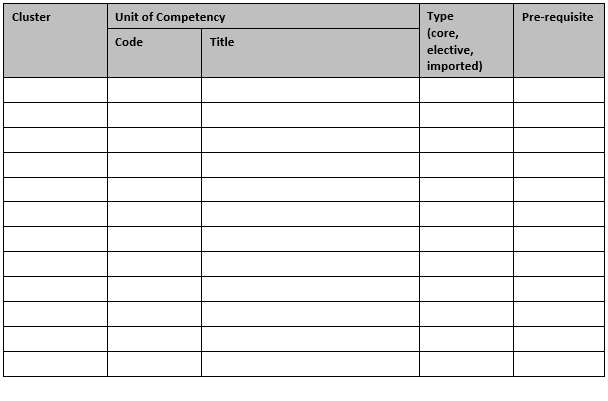
Create a 5-column table using Microsoft Word. The following shows the table headings and recommended format for the table.
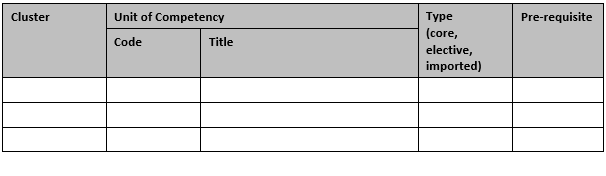
The packaging rules for the SIT20322 qualification states that there must be a total of twelve units of competency. Therefore, I make sure the Microsoft Word table has 12 rows available for inserting 12 units.
Step 4. Insert the core units for the qualification
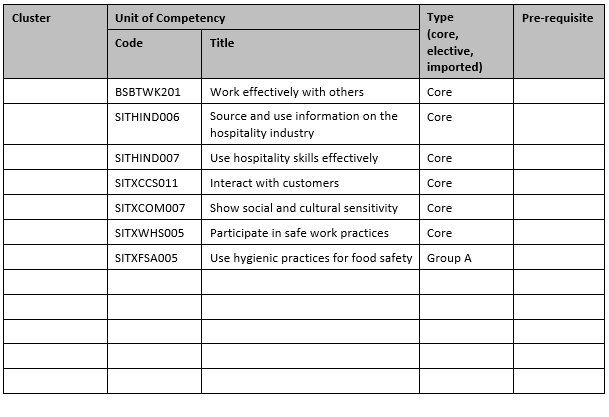
The core units for a qualification are listed. Insert the unit codes and titles. Also, insert the word ‘Core’ in the column indicating the type of unit. The SIT20322 qualification has six core units as shown below.

Step 5. Select elective units according to the qualification packaging rules
Consult with employers or industry about the typical work tasks or units of competency that should be covered by the qualification.
The qualification packaging rules specifies that one unit must be selected from the Group A list. The SITXFSA005 Use hygienic practices for food safety unit of competency has been selected and it has been added to the Microsoft Word table. Also, ‘Group A’ has been inserted in the column indicating the type of unit.
The remaining five elective units have been selected from the Group B list. The choice of electives is determined by the typical tasks performed by workers in a café or coffee shop.
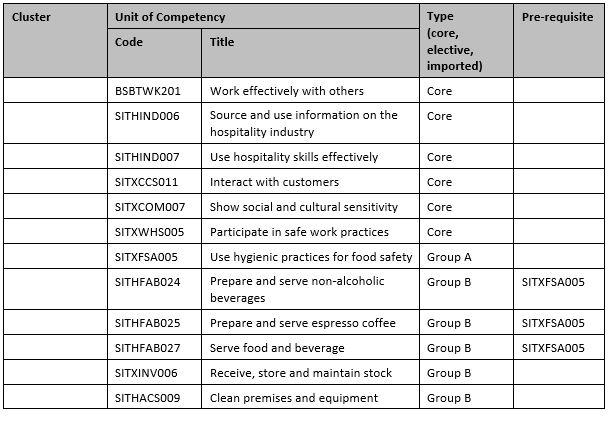
The above table shows that three of the selected units identify the SITXFSA005 unit as a prerequisite. The SITXFSA005 unit had already been selected from the Group A list.
Step 6. Sequence the units of competency
Sequence
Safety first. If there is a unit relating to safety, I usually plan for it to be delivered first or close to the commencement of the training program. Then I consider delivering units covering simple tasks before delivering units covering advanced or complex tasks. Also, I consider if there is a logical sequence that the delivery of units would best follow. For example, learn customers service skills before learning how to prepare and serve beverages.
Prerequisites
Some units specify a prerequisite unit. A prerequisite unit or units must be completed before the unit that specifies it. This is a rule that must be considered when sequencing the units of competency.
Clusters
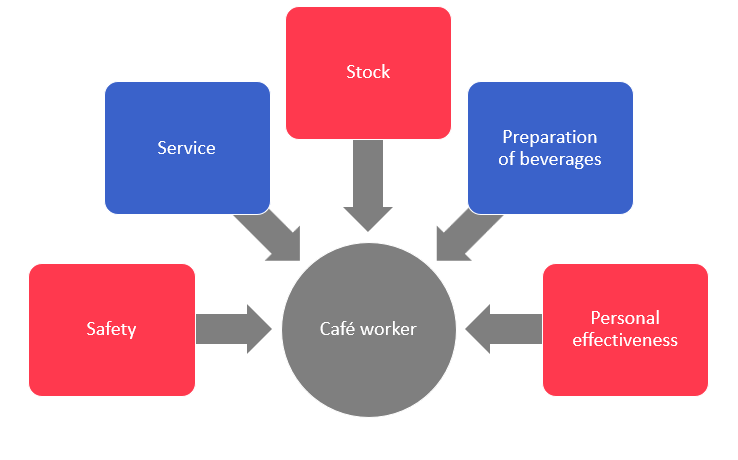
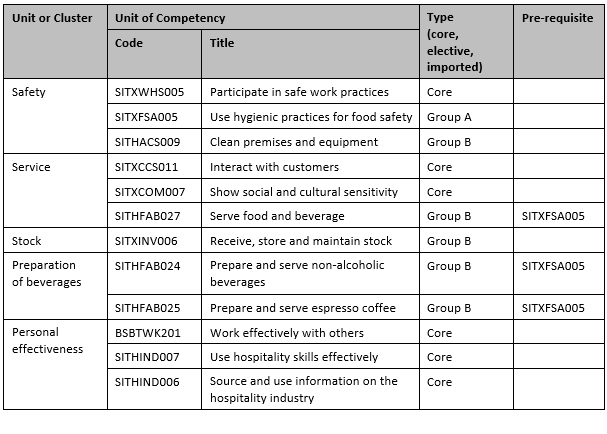
I often use clustering to organise the units of competency. This technique makes it easier for trainers to implement and easier for learners to understand the training program structure. A short descriptive title for the cluster can be used instead of using unit codes and titles that many learners can find confusing, especially at the commencement of the training program.
The following illustrates how five key areas have been used to structure the training program. It is much similar than the codes and titles for twelve units of competency.
The following table shows how the twelve units of competency for the SIT20322 Certificate II in Hospitality qualification has been clustered and sequenced.
Step 7. Check compliance with qualification packaging rules
Check that the qualification packaging rules have been complied with. In the case of the SIT20322 Certificate II in Hospitality qualification:
- Are there a total of 12 units?
- Have the 6 core units been included?
- Has 6 elective units been selected according to the packaging rules?
- Are prerequisite unit requirements addressed?
Again, consult with employers or industry. Confirm that the units of competency for proposed training program meet the requirements for the occupation or job function. In this case, are the requirements for a café worker adequately covered.
In conclusion
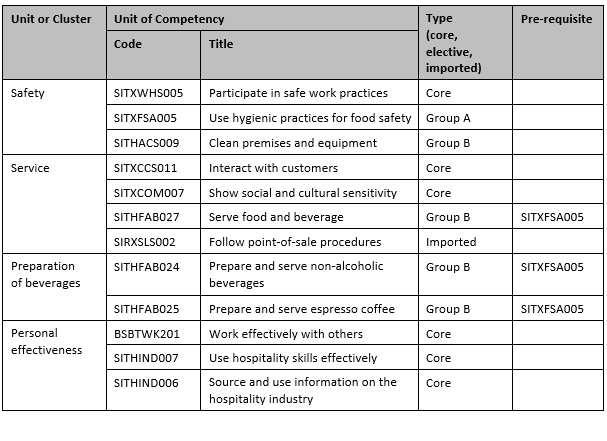
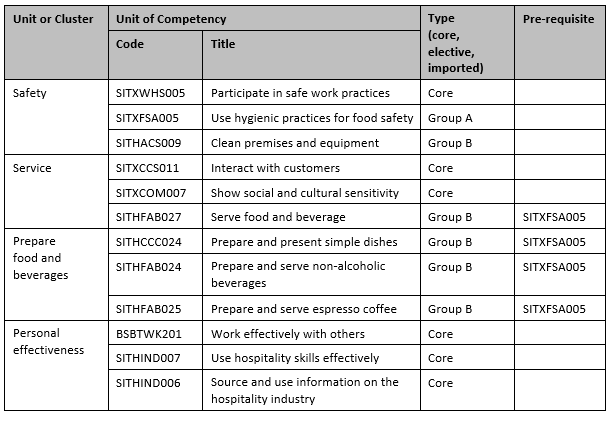
Qualification packaging rules provide the flexibility required to customise a training program to respond to the needs of a client or industry.
In the following example, the SIRXSLS002 Follow point-of-sale procedures unit has been imported to cover taking cash and card payments and giving out change and receipts.
And in the following example, the SITHCCC024 Prepare and present simple dishes unit has been included to cover the preparation of food as well as beverages.
Do you need help with your TAE studies?
Are you a doing the TAE40122 Certificate IV in Training and Assessment, and are you struggling with your studies? Do you want help with your TAE studies?

Ring Alan Maguire on 0493 065 396 to discuss.

Training trainers since 1986

 On Target Work Skills