Foundation Skills and the Australian VET system

This is the first of two articles covering foundation skills in the Australian VET system. In this article, I shall provide an overview of foundation skills:

  • What are foundation skills?
  • When were foundation skills introduced?
  • What is the FSK Foundation Skills Training Package?
  • When was the FSK Foundation Skills Training Package introduced?

The second article explains how to incorporate foundation skills when we design and develop competency-based training.

This article has been primarily written for people studying for their TAE40116 Certificate IV in Training and Assessment qualification. However, qualified VET practitioners may still get something from the content or the way the content has been presented.

What are foundation skills?

The Australian VET system uses ‘foundation skills’ in two ways:

  • Foundations skills from the units of competency
  • FSK Foundation Skills Training Package.

The following illustrates how foundation skills underpin the performance of work tasks and activities.

Foundation Skills from the units of competency

The prime function of Australia’s VET system is to help people learn to perform work tasks and activities. Units of competency describe the work tasks and activities to be performed and specify the standards of performance expected by industry and employers.

And the Australian VET system defines competency as the consistent application of knowledge and skills to the standard of performance required in the workplace. This definition acknowledges that a person needs knowledge and skills to have the ability to perform work tasks and activities.

The following are examples of information from units of competency.

Description of performance

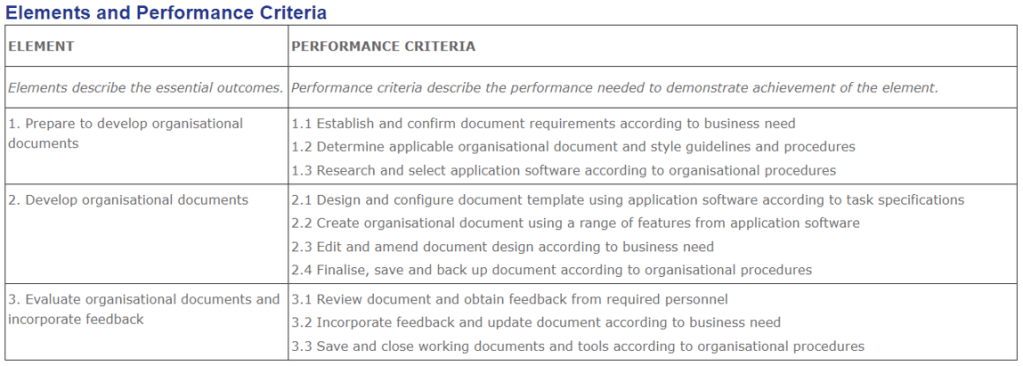
Performance of work tasks and activities are described by elements and performance criteria. The following is an example for the BSBOPS101 Use business resources unit of competency:

Knowledge required to perform a work task

The essential knowledge required to perform work tasks and activities are described by Knowledge Evidence. The following is an example for the BSBOPS101 Use business resources unit of competency:

Skills required to perform a work task

And the essential skills required to perform work tasks and activities are described by Foundation Skills. The following is an for example for the BSBOPS101 Use business resources unit of competency:

Definition of foundation skills

Foundation skills are defined as those language, literacy, numeracy and employment skills that are essential to the performance of a work task or activity but are not explicit in the performance criteria.

Language, literacy, and numeracy (LLN) skills

The Australian Core Skills Framework (ACSF) is used by Training Packages developers to describe the language, literacy, and numeracy (LLN) skills that underpin the performance of a work task or activity.

The following is an for example for the BSBOPS101 Use business resources unit of competency. It shows that the underpinning LLN skills are reading, writing, oral communication, and numeracy skills.

In the above table, you can see a clear and concise description beside the LLN skills. This gives us context and helps us understand the scope and application of each LLN skill.

Employment skills

There are two frameworks used by Training Packages developers to describe the employment skills that underpin the performance of a work task or activity:

  • Employability Skills Framework
  • Core Skills for Work Developmental Framework.

The Employability Skills Framework was introduced in 2002. It was replaced by the Core Skills for Work Developmental Framework in 2012. Both frameworks are currently in use.

The following is an for example for the BSBOPS101 Use business resources unit of competency. It shows that the underpinning employment skills are self-management, planning and organising, and problem solving skills.

Again, in the above table, you can see a clear and concise description beside the employment skills. This gives us context and helps us understand the scope and application of each employment LLN skill.

If you like history …

If you like history, then you may like to know that before foundations skills and before employability skills, the Australian VET system had Key Competencies, also known as the Mayer Key Competencies. They were introduced in 1992.

A significant change came in 2012, when the new Standards for Training Packages were released. Employablity skills were removed from qualifications, and foundation skills were added to the units of competency.

Unfortunately, Training Package developers have implemented foundation skills in different ways. There is a lack of consistency across different training packages. Here are some examples.

The following shows the foundation skills for the TAELLN411 unit. It provide useful information connecting each foundation skill with the relevant performance criteria. And it is using the 2012 Core Skills for Work framework to specify the employment skills required.

The following shows are the foundation skills for the BSBCMM411 unit. It has used the 2002 Employability Skills framework to specify the employment skills required.

The following shows the foundation skills for the SITHCCC003 unit. It is not as easy to read without table lines.

The following shows the foundation skills for the MSTDC2013 unit. It has not used a table format. I think that the information is better when presented in a table (and with table lines).

The following is from the TLID2010 Operate a forklift unit, and it is an example when a Training Package developer has decided not to specify the foundation skills. I do not believe that the foundation skills to operate a forklift have been explicitly described by the performance criteria. I do believe that the Training Package developer did not do the work required to identify the underpinning skills required to perform the task.

There are many units of competency that do not provide information about foundation skills. And in the case of the HLT Health and CHC Community Services Training Packages, there is a Foundation Skills Guide (available from the vetnet.gov.au website). This guide identifies foundation skills for many HLT and CHC units of competency.

The following shows the foundation skills for the CHCADV001 unit.

Are Foundation Skills assessable?

The recently released units of competency in the BSB Business Services, FNS Financial Services, and ICT Information and Communications Technology Training Packages are stating that foundation skills are assessable. The following is an example for the BSBOPS101 Use business resources unit of competency:

FSK Foundation Skills Training Package

The following information was extracted from the Implementation Guide for the FSK Foundation Skills Training Package (Release 2).

Foundation skills have regularly been identified by employers as essential for successful performance in the workplace. The National Foundation Skills Strategy for Adults reports that 40 per cent of employed Australians do not have the foundation skills needed to meet the complex demands of the modern workplace. These individuals may have difficulty participating in workforce development opportunities and may be limited in their ability to build new vocational skills and knowledge.

The FSK Foundation Skills Training Package was first released in 2013. It was designed to support a greater emphasis on building foundation skills within VET programs, enabling individuals to:

  • acquire the foundation skills that will enable them to participate successfully in education and training
  • build the foundation skills that underpin vocational competence.

There are three qualifications in the FSK Foundation Skills Training Package:

  • FSK10119 Certificate I in Access to Vocational Pathways
  • FSK10219 Certificate I in Skills for Vocational Pathways
  • FSK20119 Certificate II in Skills for Work and Vocational Pathways.

These qualifications are prevocational and do not provide specific vocational outcomes. However, RTOs delivering the FSK qualifications are expected to contextualise the units of competency to enable learners to develop the specific skills and knowledge that are relevant to an industry sector or a typical workplace. This contextulaisation will prepare learners for entry into a vocational learning pathway. In other words, enroll into a vocational qualification.

The FSK Foundation Skills Training Package differs from all other training packages in that it is designed to work in combination with other training packages to support learner achievement of vocational outcomes. It can be delivered before starting a vocational qualification or delivered in conjunction with a vocational qualification.

Most groups of learners will be using the FSK Foundation Skills Training Package to develop or enhance foundation skills in one or more of the following areas:

  • learning
  • reading
  • writing
  • oral communication
  • numeracy
  • digital technology.

Many learners who undertake qualifications from the FSK Foundation Skills Training Package will need considerable support from LLN specialists to address and overcome severe barriers to learning.

In conclusion

Foundation skills are important because they underpin the performance of work tasks and activities.

The Australian VET system uses ‘foundation skills’ in two ways:

  • Foundations skills from the units of competency
  • FSK Foundation Skills Training Package.

I have published another article that describe how to incorporate foundation skills in vocational education and training. The 5-step procedure described in that article will become useful as more Training Packages mandate the assessment of foundation skills.

Do you need help with your TAE studies?

Are you doing the TAE40122 Certificate IV in Training and Assessment, and are you struggling with your studies? Do you want help with your TAE studies?

Ring Alan Maguire on 0493 065 396 to discuss.

Contact now!

logo otws

Training trainers since 1986

How to incorporate foundation skills in vocational education and training

This is the second of two articles covering foundation skills in the Australian VET system. It explains how to incorporate foundation skills when we design and develop competency-based training.

The following 5 steps aim to give some practical tools and a simple procedure to incorporate foundation skills into our training:

  • Step 1. Create a table with a list of the Foundation Skills
  • Step 2. Create a Performance Criteria / Foundation Skills matrix
  • Step 3. Analyse the Foundation Skills
  • Step 4. Determine a timeframe for the training agenda
  • Step 5. Develop a Training Matrix

It is desirable to integrate foundation skills as you deliver the training. This is better than keeping foundation skills separate from learning how to perform a work task or activity.

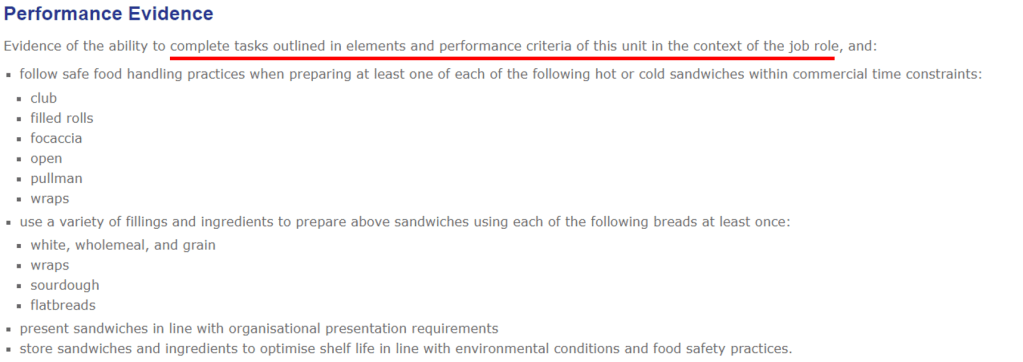
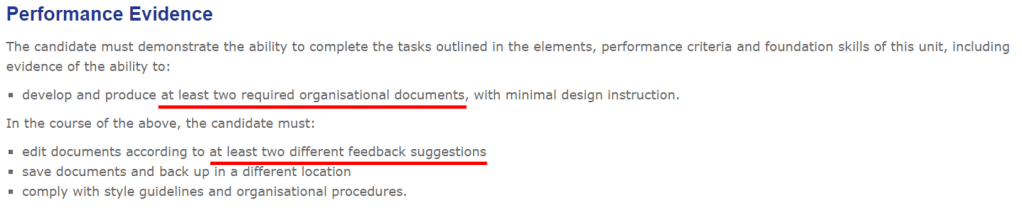
Some Training Packages are mandating the assessment of the foundation skills. For example, the Performance Evidence for the BSBOPS101 Use business resources unit states:

“The candidate must demonstrate the ability to complete the tasks outlined in the elements, performance criteria and foundation skills of this unit …”

Therefore, we will often need to ensure that we deliver training so that the foundation skills are learnt. I acknowledge that some learners may already have the specified foundation skills but some learners will not.

Step 1. Create a table with a list of the Foundation Skills

Foundation skills are documented in the units of competency, after the elements and performance criteria.

Copy the foundation skills from the unit of competency. For example, the following are the Foundation Skills for the BSBOPS101 Use business resources unit.

Add a column for notes

This can be done very quickly. You are creating a template to assist you to analyse each Foundation Skill and you will record your analysis in the ‘Notes’ column. This template will be used in Step 3.

Step 2. Create a Performance Criteria / Foundation Skills matrix

Foundation Skills are not stand-alone skills. They are the identified foundations for the performance of the work tasks. Work tasks could not be performed safely or effectively without having the Foundation Skills.

The performance of work tasks is described by the Performance Criteria. We need to make the connection between Performance Criteria and Foundation Skills. Without this connection, Foundation Skills lack meaning.

In this example, it is important to note that the headings for Foundation Skills must be read in conjunction with the specific description from the BSBOPS101 Use business resources unit.

Step 3. Analyse the Foundation Skills

Use the Performance Criteria / Foundation Skills matrix (from Set 2) and the Foundation Skills template (from Step 1) to analyse the scope of each Foundation Skill and how it connects with the Performance Criteria.

Performance Criteria / Foundation Skills matrix

The following is a completed example of a Performance Criteria / Foundation Skills matrix for the BSBOPS101 Use business resources unit. It must be read in conjunction with the Foundation Skills template (see below).

Foundation Skills template

The following is a completed example of a Foundation Skills template for the BSBOPS101 Use business resources unit.

Step 4. Determine a timeframe for the training agenda

For this example, let us say we are going to allocate on day to deliver training for the BSBOPS101 Use business resources unit. The following is a sample agenda for the training day.

Step 5. Develop a Training Matrix

The Training Matrix is used to ensure there is a plan to cover all Performance Criteria and Foundation Skills during the training.

Performance Criteria 2.2 is ‘identify resource shortages or faults and take action to ensure issue is resolved’. The following additional details shows how the Foundation Skills connect with the Performance Criteria when operating a printer. Typical tasks may include:

  • Refill paper
  • Replace toner cartridges
  • Fix simple paper jams
  • Report complex paper jams and faults
  • Reorder paper, toner cartridges, and other consumables.

The above is an example showing how specific Foundation Skills should be seamlessly incorporated into the delivery of training covering the performance of a work task. This example is only for operating a printer. The same analysis would need to be done for using other office equipment, such as: binding machines, laminator, coffee machine, etc. And the same analysis would need to be done for other Performance Criteria.

In conclusion

I have used a simple example to demonstrate how to incorporate foundation skills when designing and developing competency-based training. This procedure will work. However, for some units of competency you may need to use a ‘landscape orientation’ for the documents rather than ‘portrait’. And you will need time to do the analysis and mapping.

Some learners will need training to help them learn the foundation skills. And it is better to integrate the foundation skills when the person is learning how to perform the work tasks or activities. This approach will give context and purpose each foundation skill.

The 5-step procedure described in this article will become useful as more Training Packages mandate the assessment of foundation skills.

Do you need help with your TAE studies?

Are you doing the TAE40122 Certificate IV in Training and Assessment, and are you struggling with your studies? Do you want help with your TAE studies?

Ring Alan Maguire on 0493 065 396 to discuss.

Contact now!

logo otws

Training trainers since 1986

Rest In Peace ICTICT102

The ICTICT102 Operate word-processing applications unit of competency was deleted on the 18th of January 2021. This was part of the newly released version of the ICT Information and Communications Technology Training Package (Release 7.0).

In 2015, the ICTICT102 Operate word-processing applications unit of competency replaced the ICAICT102A Operate word-processing applications unit of competency.

In 2011, the ICAICT102A Operate word-processing applications unit of competency had replace the ICAU1129B Operate a word processing application unit of competency.

The ICAU1129B Operate a word processing application unit of competency was released on the 8th of July 2010.

After more than a decade of use a decision has been made to remove the ‘word processing’ unit of competency from the Australian VET system. Up until the last few months we have had the ICTICT102 Operate word-processing applications and BSBITU201 Produce simple word processed documents units of competency to give structure to the training and assessing of word processing skills. Has word processing become a thing of the past, just like dinosaurs?

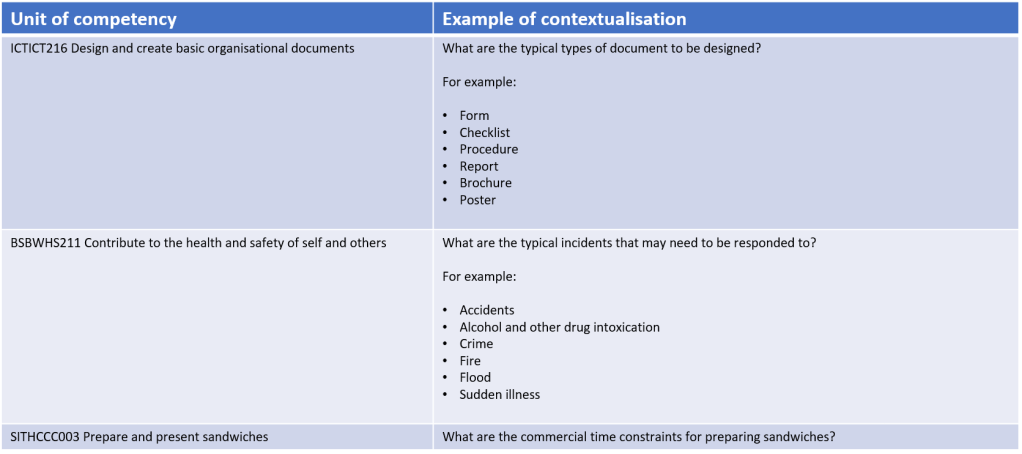
It seems that the modern worker now needs the BSBTEC201 Use business software applications or ICTICT216 Design and create basic organisational documents unit of competency. However, I think these units can be ‘word processing’ in disguise. We must contextualise the newly released units to ensure people can do what we use to call ‘word processing’, but for some reason we cannot call it word processing.

I think we are witnessing George Orwells’s Newspeak being implemented. I am picking up a trend that makes units of competency extremely vague. I know that units must be written in a way to be somewhat generic, but I feel we are heading towards making units meaningless.

Can anyone give me an answer to the following questions?

  • Is ‘word processing’ an antiquated term?
  • Does any workplace still use the term ‘word processing’?
  • Is Microsoft Word still referred to as a word processing application?

The BSB and ICT Training Packages are both developed by PwC’s Skills for Australia. I assume they hope to be displaying leadership regarding Training Package development. Are they?

Australia’s VET is changing. It is certain that the current VET Reforms are disrupting the system. But will the VET system be improved, or will the VET system be damaged? Could the VET system be destroyed?

The BSB and ICT are not the only Training Packages that are changing. Unfortunately, each Training Package developer seems to be doing their own thing. And then the new Skills Organisations are likely to do different things again. No consistency. A lack of consistency create chaos, confusion, and frustration. How are you feeling? Confused? Frustrated?

Are you looking forward to the full force of the VET Reforms?

Please tell me what you think and how you are feeling.

TAEDEL402 Plan, organise and facilitate learning in the workplace

The aim of this article is to clarify the application and terminology associated with the TAEDEL402 Plan, organise and facilitate learning in the workplace unit of competency.

Application

The TAEDEL402 Plan, organise and facilitate learning in the workplace unit describes skills and knowledge required to plan, organise and facilitate learning for individuals in a workplace, using real work activities as the basis for learning. There is a range of circumstances that are applicable for this unit, including:

  • Work placements
  • Apprenticeships
  • Traineeships.

It is common for VET trainers or TAFE teachers to be involved with coordinating or facilitating workplace training. For example, many qualifications from the Health and Community Services Training Packages require work placement. Trade qualifications are delivered as apprenticeships. And many industry sectors have qualifications that can be delivered as a traineeship.

Terminology

The TAEDEL402 Plan, organise and facilitate learning in the workplace unit has two terms that need to be clarified:

  • Work-based learning pathway
  • Learning-facilitation relationship.

From my experience, these two terms are not commonly used.

Work-based learning pathway

The work-based learning pathway can be thought of as a training plan. This plan should describe what training is planned, where and when the planned training will occur, and the role and responsibilities of people involved. The development of the training plan is covered by Elements 1 and 2 of the TAEDEL402 Plan, organise and facilitate learning in the workplace unit. And the implementation of the training plan is covered by Element 4.

The following flowchart illustrates three stages of developing and implementing a training plan or pathway.

Learning-facilitation relationship

The learning-facilitation relationship can be thought of the relationships between the trainer and the learner, trainer and the learner’s supervisor in the workplace, and trainer and other people in the workplace. Successful workplace training requires the trainer and the learner’s supervisor working together to support the learner.

The establishment of relationship is covered by Element 3 of the TAEDEL402 Plan, organise and facilitate learning in the workplace unit. The maintenance of relationships is covered by Element 5. And the closure of relationships is covered by Element 6.

The following flowchart illustrates three stages of establishing, maintaining, and closing the relationships.

The following table shows how the TAEDEL402 Plan, organise and facilitate learning in the workplace unit is fundamentally about:

  • Developing and implementing a training plan
  • Establishing and maintaining relationships.

Competency-based training in the workplace

Training plan are developed to clearly describe a pathway to achieving confirmed learning objectives or goals. In the Australian VET system, competency standards, that have been developed and endorsed by industry, are used to determine the learning objectives.

Competency standards describe the desired outcome. The RTO must develop a training plans and seek agreement from those people involved. Workplace training will always involve the learner’s workplace supervisor. However, there may be other people in the workplace that are involved or need to be informed about the planned training. Training in the workplace can impact upon the normal workflow or operations.

Also, workplace training will require an appropriate level of supervision for the learner. Some work tasks may be dangerous. The health and safety of the learner and others in the workplace is essential. And sometimes mistakes, errors, or work tasks performed incorrectly may be expensive. For example, equipment could be damaged, valuable material wasted, or sub-standard product or poor customer service could lead to a damaged reputation.

Roles and responsibilities

The successful implementation of workplace training requires the roles and responsibilities to be clarified before the training plan is agreed to. The following are some questions that can help clarify roles and responsibilities:

  • Who will ensure safety of the learner in the workplace?
  • Who will supervise the learner? What level of supervision is appropriate for the learner’s levels of knowledge, skill, and experience?
  • How will the the supervisory arrangements be monitored?
  • What off-the-job training will be provided? What on-the-job training will be provided? Who will deliver the training? When will the training be delivered?
  • Who will monitor the learner’s progress against the training plan? How and when will progress be monitored? Who will be involved?
  • What records will be kept to record training and performance of work tasks in the workplace? Will a task book or logbook be used? Are third-party reports required? Who will keep the records?
  • What responsibilities does the learner have? What commitment must the learner make?
  • What is the process for raising and resolving concerns and issues?

In conclusion

An important role performed by many VET trainers or TAFE teachers is coordinating and monitoring the process of workplace training. The role of coordinator often requires a different set of skills than the skills needed to deliver training or assess competency. Sometimes being a coordinator will require diplomatic skills, meeting skills, issue resolution skills, and highly developed communication and interpersonal skills.

Also, contractual arrangements associated with work placements, apprenticeships and traineeships govern various aspects of workplace training, such as, safety and supervision.

Coordinating workplace learning can be challenging. But the workplace is the best place to truly develop competency. Remembering that competency is defined as the consistent application of knowledge and skill to the standard of performance required in the workplace.

Australia’s VET system

Australia’s vocational education and training (VET) system is complex and forever changing. People studying for their TAE40122 Certificate IV in Training and Assessment qualification may find useful information on this website. Tap or click on the following ABC logo to find out more.

ABC logo

Contact now!

logo otws

Training trainers since 1986

VET Reform: Qualification Design Survey

The VET Reforms are happening. And we are being asked to contribute to the changes. Generally, I think it is a waste of time for many of us to get involved in the consultation process because changes are being implemented anyway. However, I got an email this morning from the Skills Reform Engagement Team at the Department of Education, Skills and Employment reminding me that time was running out if I wanted to respond to the Qualification Design Survey.

Qualification design elements

I decided to do the survey. It first wanted to know my thoughts about the following key qualification design elements:

  • Qualifications based on appropriately grouped occupation and skills clusters to deliver broader vocational outcomes for students (including supporting stronger recognition of cross-sectoral and transferable skills).
  • Simplifying products and removing complexity through the separation of occupational and training standards to reduce the level of prescriptive conditions in current qualifications and make better use of industry and educationalist expertise.
  • Stand-alone and/or stackable short form training products, with improved pathways advice to support students to rapidly upskill or reskill to pursue new career opportunities (including facilitating stronger articulation pathways between school, VET and Higher Education to support lifelong learning).

Here is my reply to the survey.

The first point, about ‘Qualifications based on appropriately grouped occupation and skills clusters to deliver broader vocational outcomes for students (including supporting stronger recognition of cross-sectoral and transferable skills)’, is a reasonable idea. It is not a new idea, but it has been difficult idea to implement for the past few decades. If competency standards become too vague then they will weaken the VET system in Australia.

Some people do not focus on the details of a skill and how it may differ in different situations or circumstances. For these people they may think it is okay to have a ‘operate a vehicle’ unit of competency. But one unit of competency cannot cover operating a car, taxi, van, truck (different types of truck), forklift, tractor, etc. This is an exaggerated example design to illustrate the concept. We can only go so far in creating generic or cross-sectoral skills.

There has been many examples how generic or cross-sectoral skills have been widely used for many years. For example, first aid and make presentations.

The second point, about ‘Simplifying products and removing complexity through the separation of occupational and training standards to reduce the level of prescriptive conditions in current qualifications and make better use of industry and educationalist expertise’, is a really bad idea.

The separation of occupational and training standards will destroy the founding and fundamental principle of an Australian VET system that is industry-led. This proposal will not simplify or remove the perceived complexity.

Keep educational experts away from prescribing qualifications. In 1993, Australia implemented the new training system that we now know as VET. Industry and employers replaced educational experts as the people who should determine the skills needed by their workforce. Let’s not go back to a system that created unemployable VET graduates.

The third point seems to cover several points:

  • Stand-alone and/or stackable short form training products
  • Improved pathways advice
  • Facilitating stronger articulation pathways between school, VET and Higher Education.

Nothing new about these three sub-points. Skill Sets have been with us for more than a decade. Governments have squandered away millions of taxpayer dollars on creating and re-creating pathway advice. Investment in ‘new’ career advice needs to be done once and then maintained. We should not have to start from scratch everything we have a change of government or change of minister from the same government.

In regard to articulation, this has been an aspirational feature of Australia’s VET system for decades. VET people think it is a good idea. University people seem to have trouble with the idea with some exceptions. For example, dual-sector universities use it as a feed-in strategy to capture students who did not get the ATAR score need to do the higher education qualification. They may offer the student an opportunity to do a diploma for a year, and if successfully completed, the student is offered a second-year placement in a bachelor degree qualification. Articulation is selective and only offered when the university sees a marketing opportunity.

We should stop thinking that articulation is VET Reform. It should be shifted to being a Higher Education Reform.

Overall, the current key design elements of the Australia VET system include:

  • Qualifications based on occupations, and in some cases grouped occupations
  • Cross-sectoral and transferable units of competency are widely available and used
  • Stand-alone and stackable skill sets are widely available and used
  • Career pathways advice have been, and continues to be, available
  • The possibility of articulation has been available for a long time.

I don’t think these elements need to be tested.

Qualification design objectives

The survey gave the following preamble.

Trials will be underpinned by the following design objectives to ensure they align with the direction of the future training system design:

  1. Broader vocational outcomes to recognise skill commonality and promote labour mobility, where feasible.
  2. A reduction in unnecessary training product duplication.
  3. A reduction in training product complexity, through reducing over-specification and improving training delivery and assessment advice.
  4. An enhanced relationship between training products, training needs and pathways to employment and further education.
  5. Greater training product flexibility and enhanced responsiveness to changing industry need through short courses (micro-credentials and skill sets).
  6. Improved articulation and pathways between education sectors, building on the AQF review recommendations.

And here is my reply to the survey.

1. If the recently released BSB Business Services Training Package is an example for the future of broader vocational outcomes, then we are heading in the wrong direction.

2. The reduction in unnecessary training product duplication has already commenced. Why are we being consulted when it is already happening?

3. During 2020, there was evidence that an attempt to ‘reduce training product complexity’ has commenced. For example, the Release 7.0 of the BSB Business Services Training Package has made changes. But in the name of simplification, we are actually increasing the complexity. We know have training package documents (from training.gov.au), implementation guides and other companion volumes (from vetnet.gov.au), and interpretation guides. Multiple places to look for information, with the quantity of documentation increasing. And every new document seems to have different layout and format.

4. Anyone who knows the Australian VET system can understand the relationship between training products, training needs and pathways to employment and further education. Some people may be ignorant of these relationships. The VET system does not need the enhancements. These people need to learn more about the VET system – it is not that hard to learn.

5. For decades, the Australian VET system has had all the design elements to be flexible and responsive to client needs. It is inflexible and unresponsive RTOs have should be addressed. Many people have incorrectly blamed qualification design for issues. Most qualifications offer great flexibility and units of competency can be contextualised, with the exception being qualifications needing to be more rigid due to a regulator’s requirements.

6. We should stop thinking that articulation is VET Reform. It should be shifted to being a Higher Education Reform. (Articulation was covered by my comments to the previous question.)

In conclusion

The time it took to respond to the survey was probably a waste of time. However, after the VET Reforms have been implemented and the Australian VET system has be damaged, if not destroyed, then I shall have the great pleasure saying that someone should have listened to me.

I think the public consultation process is primarily a sham. The VET Reforms are going to happen anyway, and some reforms have already commenced. There seems to be a big rush to implement something before the next federal election, even if that something has no merit.

What do you think about the tsunami of VET Reforms? Did you know that the changes had already commenced?