TAELLN411 Address adult language, literacy and numeracy skills

The basic knowledge and skills required to address adult language, literacy, and numeracy (LLN) skills in the Australian VET system is covered by the TAELLN411 Address adult language, literacy and numeracy skills unit.

This article has been primarily written for people studying for their TAE40116 Certificate IV in Training and Assessment qualification. However, qualified VET practitioners may still get something from the content or the way the content has been presented.

Analysis of the TAELLN411 unit

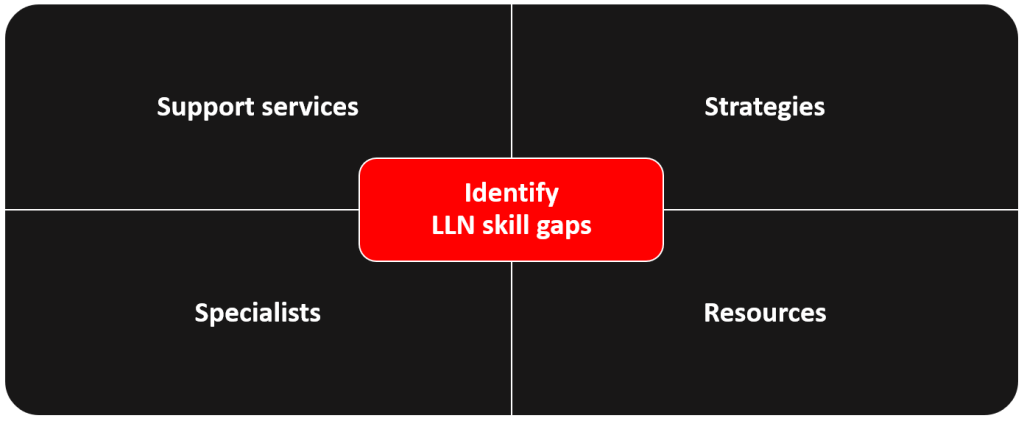
An analysis of the TAELLN411 unit reveals five fundamental activities that relate to addressing adult LLN skills:

  1. Identify LLN skill gaps
  2. Implement strategies to address the LLN skill gaps
  3. Use resources to address the LLN skill gaps
  4. Seek assistance from LLN specialists
  5. Arrange support services.

The following diagram shows that the identification of LLN skill gaps is central to everything else we do in regards to addressing adult LLN skills.
Some important notes before we begin

I have previously published four articles that provide some essential background information:

The TAELLN411 unit describes the skills and knowledge a VET trainer or assessor requires to:

  • identify LLN skill requirements of the training and work environments
  • use strategies and resources that meet the needs of learners.

Competence in this unit does not indicate that a person is a qualified specialist LLN practitioner.

Developing the the LLN skills for children and adults is different. Therefore, addressing the LLN skills for children is outside the scope of VET and is not covered by the TAELLN411 unit.

1. Identify LLN skill gaps

Our starting point is to identify the type and severity of LLN skill gaps. The two occasions when LLN skill gaps are identified are:

  • Before the training program starts
  • During the training program.

1.1 Before the training program starts

An RTO will usually conduct a pre-training review (PTR) before enrolment into a training program. It will consist of a diagnostic assessment of a person current LLN skills. Also, a person’s computer or digital literacy skills are usually assessed. The person’s current LLN skills are compared with the LLN skills required for the training program to identify any LLN skill gaps.

The Australian VET system uses the Australian Core Skills Framework (ACSF) to identify LLN skill levels. For more information, go to:

The conduct of a PTR supports compliance with Clause 1.7 of the Standards for RTOs. And most programs delivered with state government funding will also require a PTR to be conducted.

1.1.1 Validated ACSF tools

When a diagnostic assessment tool is ‘validated’, it simply means that the developer of the tool or instrument has come to the opinion that it measures what it was designed to measure (with some assurance that the result is accurate). Therefore, when a validated ACSF tool gives the result that a person has a reading skill at the ACSF Level 2, then it is reasonably assured that the person’s reading skill is at the ACSF Level 2

The Australian Government’s Department of Education, Skills and Employment has published information about providers of validated or approved LLN assessment tools.

1.2 During the training program

It will be common for trainers and TAFE teachers to discover learners who have poor LLN skills during the delivery of a training program. Learners may be observed struggling to learn training program content or complete assessment tasks. Some learners can become frustrated or angry because they are struggling. Some learners can become quiet or withdrawn. And some may become disruptive and display challenging behaviours.

It is a good idea to encourage learners to:

  • be self-aware of any learning difficulties they experience
  • ask for help as soon as they become aware of their struggles.

This will require the trainer or TAFE teacher to establish and maintain an emotionally safe and supportive learning environment.

2. Implement strategies to address the LLN skill gaps

Once an LLN skill gap or gaps have been identified, the trainer or TAFE teachers will need to take action. Considering options, selecting strategies that meet individual needs, and preparing to deliver strategies to develop LLN skills can be time consuming activities.

However, I know from first-hand experience that not all trainers and TAFE teachers will be allocated time to support LLN skill development. A VET practitioner may be ready and willing to provide support but unable to deliver this support due to the lack of available time.

There are two broad areas for action that that can be taken by trainers and TAFE teachers:

  • Select and use instructional strategies
  • Select and use assessment strategies.

This is the terminology from the TAELLN411 unit. You may like to translate the term ‘instructional strategies’ to be ‘training strategies’. An RTO’s training and assessment strategy (TAS) for the delivery of a particular qualification may give some general guidance. However, the general guidance may not be appropriate or adequate for all individuals with LLN skill gaps.

2.1 Select and use instructional strategies

Instructional strategies are actions that support the development of LLN skills, and these include:

  • General instructional strategies
  • Instructional strategies that target a specific LLN skill.

2.1.1 General instructional strategies

The following are some general strategies we can used when we design and deliver a training program:

  • Allow more time to learn new knowledge and skills
  • Provide time or opportunities to practice
  • Increase the number and duration of breaks between training sessions
  • Provide more feedback and guidance
  • Acknowledge attainment or progress towards attainment of knowledge and skills
  • Deliver a foundation skills qualification before or at the same time as the vocational qualification.

The FSK Foundation Skills Training Package consists of three qualifications that can be used to develop a person’s LLN skills.

A strategy, such as ‘deliver a foundation skills qualification’ is likely to be outside the scope of a trainer’s or TAFE teacher’s responsibility. However, a trainer or TAFE teacher can raise this with a person who does have the appropriate responsibility within the RTO.

2.1.2 Instructional strategies that target a specific LLN skill

The following are some strategies that target a specific type of LLN skill:

Reading

  • Explain and help the learner develop reading strategies such as skimming or reading for gist
  • Give the learner time to read and process the information
  • Identify and explain terminology, jargon, abbreviations, or acronyms
  • Encourage the learner to develop their own glossary of terms.

Writing

  • Explain and help the learner develop writing strategies such as paragraph. sentence structure, spelling, and grammar
  • Give the learner time and opportunities to practice writing
  • Provide constructive feedback and suggestions for improved writing
  • Encourage the learner to proofread or read aloud what they have written.

Oral communication

  • Give examples of words or phrases that can be used when communicating with others
  • Demonstrate the communication techniques and standards required
  • Use role plays for the learner to practice speaking, listening, and interacting with others
  • Build confidence by starting with simple role play situations before moving onto more complex or challenging situations

Numeracy

  • Only cover the numeracy skills required to perform a particular work skill or activity
  • Cover underpinning mathematical principles, concepts or methods, and explain how it relates to the work skill or activity
  • Cover one mathematical principle, concept or method at a time
  • Give the learner time and opportunities to practice the math.

2.2 Select and use assessment strategies

Assessment strategies are actions that support learners when being assessed, and these include:

  • Apply reasonable adjustment
  • Provide detailed instructions before commencing the assessment
  • Allow opportunity for the candidate to ask questions about the assessment
  • Allow adequate time for the candidate to prepare for the assessment
  • Arrange for assessment to occur at a different time or place.

Note: These support strategies should apply to all learners being assessed, not just offered to learners with a low level of LLN skills.

3. Select and use resources to address the LLN skill gaps

As previously mentioned, I know that not all trainers and TAFE teachers will be allocated time, or sufficient time, to support the development of LLN skills. A VET practitioner may want to provide support but unable to deliver this support due to the lack of available time.

Another time consuming activity can be searching, selecting, developing and customising resources. Again, the VET practitioner may be ready and willing to produce resources but unable to do this due to the lack of available time.

3.1 Search and review available learning and assessment resources

It is relatively easy to conduct a internet search for available learning and assessment resources. Use your internet browser and enter search terms, such as:

  • [Unit code or Topic] training resources
  • [Unit code or Topic] workbook
  • [Unit code or Topic] worksheets
  • [Unit code or Topic] activity sheets.

Also, try filtering your search by selecting ‘Images’. For example, if you use Google to search images for ‘sandwich making activity sheet’ you get the following result.

If you find a resource, then it will need to be reviewed for:

  • Relevance
  • Currency
  • Readability
  • Usability
  • Ability to be purchased or freely used without breaching copyright.

An internet search may not get you exactly what you need but it may give you ideas for creating your own resource.

3.1.1 Copyright

Not everything we can find on the internet can be used by us. We must think that everything is copyright and we should avoid breaching copyright. Sometimes we can find resources on the internet that can be used but they must be appropriately acknowledged. For example, government departments or regulatory authorities publish relevant documents and video resources to be used for training purposes, such as:

Example of documents that can be used without breaching copyright

Example of videos that can be used without breaching copyright

3.2 Customise learning and assessment resources

Some learning and assessment resources may need to be customised before being used. Customisation may include:

  • Improving readability or usability of the resource
  • Simplifying language used in the resource
  • Explaining terminology, jargon, abbreviations, or acronyms
  • Adding images or increasing the visual impact of information.

3.3 Design and develop learning and assessment resources

Some learning and assessment resources may need to be produced. Resources may include documents, PowerPoint slides, videos, web pages, etc.

I am currently writing a series of articles that cover the design and development of basic documents:

4. Seek assistance from LLN specialists

Sometimes a trainer or TAFE teacher is unable to address an LLN skill gap because of a lack of time or lack of capability in regards to supporting learners with LLN skill gaps. This is why we might need to seek assistance from an LLN specialists.

What can an LLN specialist do?

  • Conduct detailed analysis if a learner’s LLN skills gap
  • Work directly with the learners to close LLN skill gaps
  • Provide advice to the trainer or TAFE teacher.

Some RTOs may employ an LLN specialist, while other RTOs may use a consultant to provide LLN specialist support. To find an LLN specialist, you may need to contact your local TAFE or adult and community education provider.

5. Arrange support services

Learners may experience a range of issues that can be a distraction or impede their learning progress. A learner may benefit from a support service, such as:

  • Youth services
  • Mental health services
  • Drugs or alcohol services
  • LLN support services.

You may need to suggest, encourage, support, or arrange for your learner to connect with a support service.

5.1 Reading Writing Hotline

The Reading Writing Hotline is a free national phone referral service for adults looking to improve their reading, writing, maths, or computer skills. It is funded by the Australian Government and managed by TAFE NSW.

5.2 Cultural and social sensitivities

Someone who is told that they may need help from an LLN specialist or a support service may feel a range of emotions, including disappointment, embarrassment, or shame. We need to speak to the person confidentially, and with sensitivity.

In particular, we need to be aware how people from different cultural and social backgrounds may feel or respond to an offer of support or assistance when they lack the required LLN skills.

Some people have developed strategies to hide their lack of LLN skills. And sometimes these people have been hiding their lack of LLN skills for a long time.

In conclusion

There is a high chance that all trainers and TAFE teachers will frequently have learners with LLN skills lower than what is required. It is important for VET practitioners to be ready, willing and able to respond when LLN skill gaps are identified. But more important is for RTOs to be ready, willing and able to provide adequate resourcing to address LLN needs of enrolled learners.

The following diagram shows the essential activities covered by the TAELLN411 Address adult language, literacy and numeracy skills unit.

The first thing is to identify LLN skill gaps. Then we need to take action to address the LLN skill gaps, for example:

  • Implement strategies to address the LLN skill gaps
  • Use resources to address the LLN skill gaps
  • Seek assistance from LLN specialists
  • Arrange support services.

Evaluate effectiveness

It is good practice to evaluate effectiveness of the actions we have taken to address LLN skill gaps. We can continuously learn from our experience. And we may uncover areas for our own ongoing professional development as a trainer or TAFE teacher.

Do you need help with your TAE studies?

Are you a doing the TAE40122 Certificate IV in Training and Assessment, and are you struggling with your studies? Do you want help with your TAE studies?

Ring Alan Maguire on 0493 065 396 to discuss.

Contact now!

logo otws

Training trainers since 1986
What is assessment validation?

This article describes what assessment validation is, and in this article I will cover:

  • An introduction to assessment of validation
  • The definition of assessment validation
  • A prime source of information about assessment validation
  • The difference between validation and moderation.

Introduction to assessment of validation

The Australian VET system is highly regulated. The regulations that must be complied with are the Standards for Registered Training Organisations (RTOs). One compliance requirement is that RTOs must continuously improve training and assessment services. Two ways that an RTO may identify improvements are:

  • Training evaluation
  • Assessment validation.

Training evaluation

We say that we evaluate training. Evaluation is the quality review of the training process. Most people have completed an evaluation form at the end of a training program. This is a common method of gathering data that can be analysed to identify areas for improvement focused on the delivery of training.

Assessment validation

We say that we validate assessment. Valuation is the quality review of the assessment process. The Standards for RTOs states that:

  • RTOs must conduct assessment validation
  • RTOs must maintain assessment validation records.

If you are new to assessment validation, you may like to think of this activity being the evaluation of assessment, but we called it ‘validation’. It is a method of gathering data that can be analysed to identify areas for improvement focused on the conduct of assessments.

Definition of assessment validation

A definition of terminology used by the Australian VET sector can be found in the glossary of the Standards for RTOs.

Assessment valuation is defined as:

“Validation is the quality review of the assessment process.

It involves checking that the assessment tools produces valid, reliable, sufficient, current and authentic evidence to enable reasonable judgements to be made as to whether the requirements of the training package or VET accredited courses are met.

It includes reviewing a statistically valid sample of assessments and making recommendations for future improvements to the assessment tool, process and outcomes and acting upon such recommendations.”

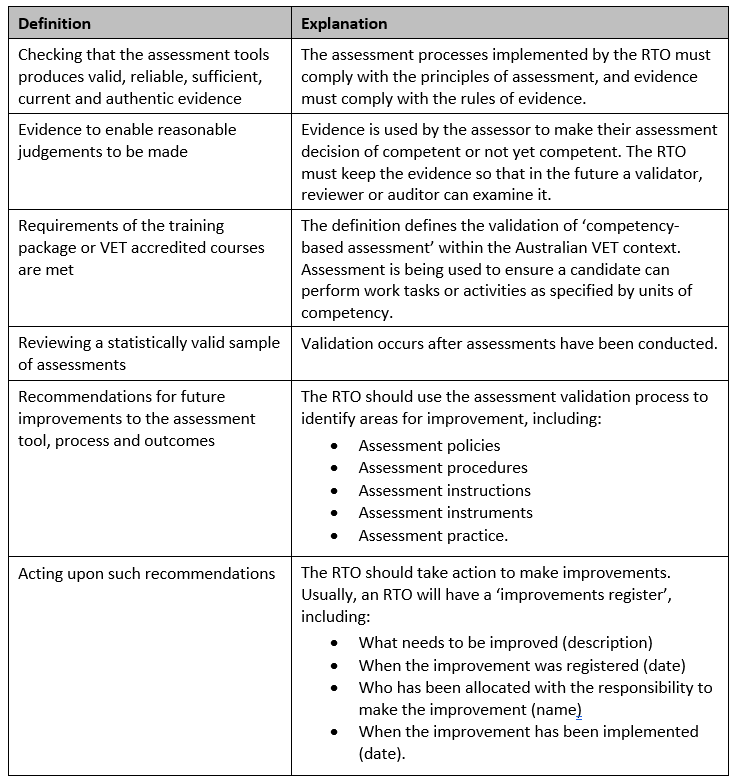
I have dissected the definition and provided the following explanation.

Information about assessment validation

A prime source of information about assessment validation is published by the Australian Skills Quality Authority (ASQA). A fact sheet about conducting validation is available. It can be downloaded as a PDF file or viewed onscreen from the ASQA website.

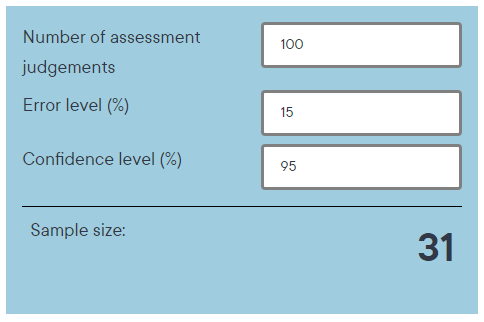
Validation sample size calculator

ASQA has provided a ‘validation sample size calculator’. It can be used to calculate the number of assessments that would represent a statistically valid sample size. The example given by ASQA shows that 31 samples of assessments are required for validation when a total of 100 students have been assessed by an RTO.

Random sample selection

The selection of assessments should be randomly selected. For example, if 31 out of 100 assessments are required, select every third name on an alphabetical list of students.

If you are invited to an assessment validation meeting, please be prepared for a long meeting (and take your lunch).

Difference between validation and moderation

Some people get confused about validation and moderation.

  • Assessment validation is the quality review of the assessment process and is generally conducted after assessment is complete.
  • Assessment moderation is a quality control process aimed at bringing assessment judgements into alignment.

Assessment moderation

Assessment moderation occurs when a group of assessors meet to discuss sample assessments. The purpose of moderation is to help different assessors come to a common agreement so that their future assessment are consistent and based on evidence. The principle of assessment being addressed is ‘reliability’.

It would be useful to have a range of sample assessments at a moderation meeting:

  • Assessments that are clearly competent
  • Assessments that are clearly not yet competent
  • Assessments that are difficult to make a clear decision.

In conclusion

We evaluate training, we validate assessments.

RTO must conduct assessment validation:

  • RTOs must review each training program at least once over a five-year period
  • RTOs must review a statistically valid sample of assessments
  • RTOs must keep records of assessment validation.

And assessment validation is not the same thing as moderation.

Do you need help with your TAE studies?

Are you a doing the TAE40122 Certificate IV in Training and Assessment, and are you struggling with your studies? Do you want help with your TAE studies?

Ring Alan Maguire on 0493 065 396 to discuss.

Contact now!

logo otws

Training trainers since 1986
How to describe a unit of competency in a way that can be understood by learners

The Australian VET system is based on competencies. Units of competency have been developed by industry to describe the performance of work tasks or activities. By design, these units of competency are vague or ambiguous, so as to allow contextualisation for different workplaces, different circumstances or different situations. This may include different tools, equipment or materials being used to perform the work.

Trainers and TAFE teachers need the ability to translate, or transform, a unit of competency into something that can be understood by their learners. The structure and jargon of units of competency often need to be removed, or modified. When we communicate to our learners, we may need to:

  • Remove the decimal numbering of performance criteria (1.1, 1.2, 2.1, 2.2, 2.3, etc.)
  • Use a simple numbering system (Step 1, Step 2, Step 3, Step 4, Step 5, etc.)
  • Use different words to better describe the task step to be performed
  • Re-sequence because the performance criteria are not always in the order of performing the work task or activity
  • Re-structure because the elements are not always the best way to communicate how the work task or activity should be performed.

Structure of a work task or activity

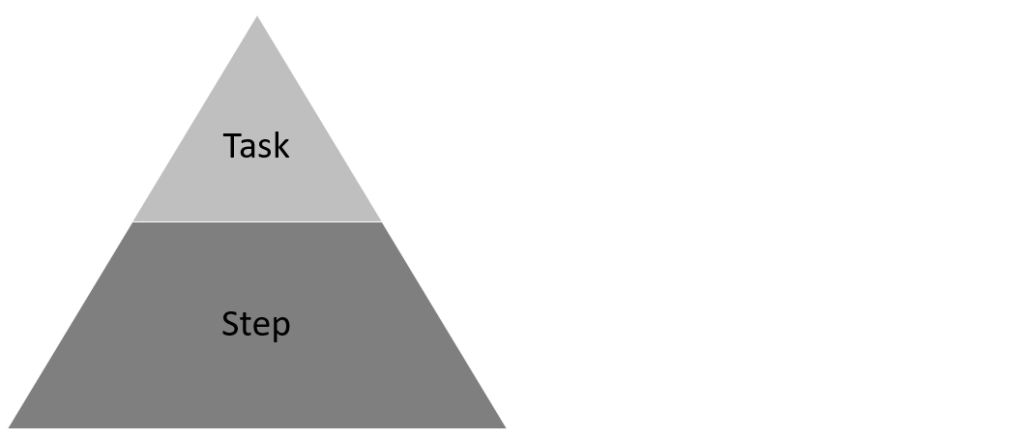
A unit of competency has a ‘task, element, and performance criteria’ structure.

Generally, I use a ‘task and step’ structure.

However, if there are too many steps or stages that are needed to describe the performance of a work task or activity, I use ‘task, part and step’ structure.

Work flow: is it a process or a cycle?

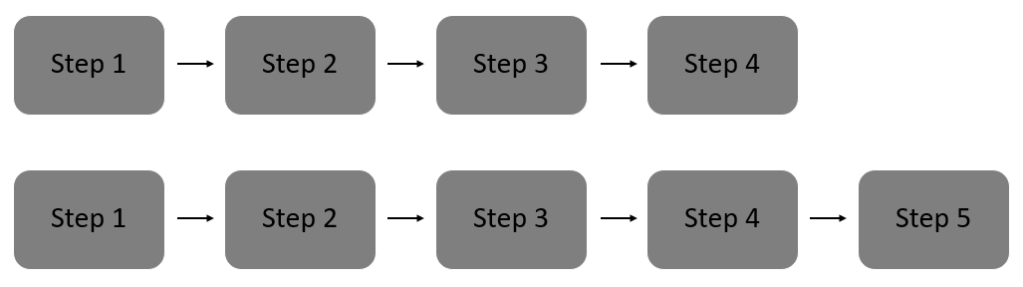
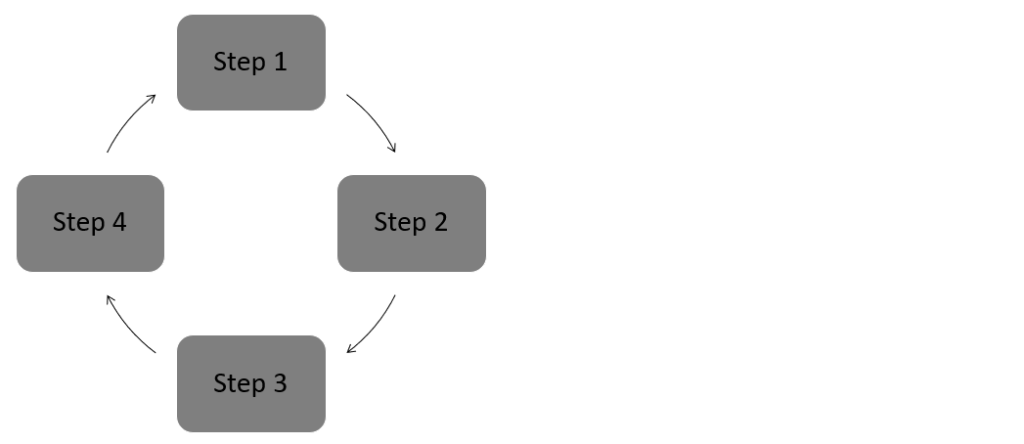
It is useful to think about performing work as a flow. A work process can have a defined start and a defined end, or it could be a continuous cycle. A diagram can be used to help our learners ‘see’ the entire work task or activity, and how one step is followed by the next.

A simple flowchart

Flowcharts can get complicated. But a simple flowchart can quickly capture, and communicate, the essence of a work task or activity. The following flowcharts illustrates a 4-step and a 5-step process.

Note: When there are more than five steps, it is a good idea to add structure by ‘chunking’ steps into parts. People often count: one, two, three, a lot, far too much.

A simple cycle

A cycle diagram can be used when the work task or activity is continuous, repetitive, or seasonal. The following illustrates a 4-step cycle.

And the following illustrates a a 5-step cycle.

Note: A cycle diagram can be used to describe steps or parts of a process. Each part could then be further described by a flowchart or task breakdown.

An example

The following shows how to translate and transform a unit of competency so that is can be better understood by learners. I have use the BSBSUS211 Participate in sustainable work practices unit for this example.

Step 1. Unpack the unit of competency

When unpacking the BSBSUS211 Participate in sustainable work practices unit, it becomes apparent that it consists of two distinct work tasks:

  • Workplace sustainability, and
  • Environmental hazards or breaches.

The following highlights performance criteria 2.2 and 2.3 as being sperate from the other performance criteria.

Step 2. Create a work flow structure

Select an appropriate diagram to describe the work flow.

Workplace sustainability

A cycle diagram has been used to create a new structure for performing the workplace sustainability task.

Note: The ‘implement improvement’ step has been added to show what happens after the ‘present suggestions for improvement’ step. However, learners are only required to satisfactorily perform the first four steps of the cycle for the BSBSUS211 Participate in sustainable work practices unit to be deemed competent. Implementation is outside the scope of this unit.

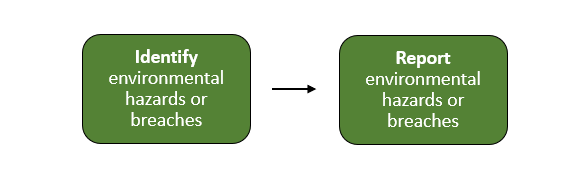
Environmental hazards or breaches

And a simple flowchart has been used to show the two steps for identifying and reporting environmental hazards or breaches.

Step 3. Map performance criteria

A matrix can be used to map the performance criteria to the new structure that will communicate how to perform the workplace sustainability task.

The purpose of the mapping document is for us to check compliance with the requirements specified by the unit of competency. This mapping can be expanded to cover foundation skills and assessment requirements. We would not give this mapping document to our learners because it has too much details.

Step 4. Develop a task breakdown

A task breakdown can be used to give details about performing a work task or activity.

In this example for the BSBSUS211 Participate in sustainable work practices unit, the performance criteria have been re-structured and re-sequenced. Also, the elements and performance criteria have been re-worded and simplified.

In conclusion

In this article, I have described how to translate and transform a unit of competency into something that can be understood by learners. A 4-step process can be used:

I believe that an appropriate diagram can help communicate the flow of work to our learners; but it must be keep simple. And a task breakdown can be used to provide procedural details.

Do you need help with your TAE studies?

Are you a doing the TAE40122 Certificate IV in Training and Assessment, and are you struggling with your studies? Do you want help with your TAE studies?

Ring Alan Maguire on 0493 065 396 to discuss.

Contact now!

logo otws

Training trainers since 1986

Australian Core Skills Framework Workshop – July 2021

An understanding of the Australian Core Skills Framework (ACSF) is essential for trainers and TAFE teachers working in the Australian VET sector.

On Target Work Skills is proud to be presenting this interactive workshop facilitated by Alan Maguire.

Workshop objectives

In this workshop you will learn:

  • What is the ACSF?
  • What are the ACSF Performance Indicators?
  • What is the relationship between foundation skills and the ACSF?
  • How are digital literacy skills being integrated with the ACSF?
  • How can the ACSF be used to identify LLN skill gaps?

You will receive a certificate that can be used as evidence of your participation in this professional development activity.

Workshop dates

Select one of the following:

  • Monday 5th of July, 2021
  • Tuesday 13th of July, 2021
  • Friday 23rd of July, 2021

Start time 10:00am Australian Eastern Standard Time, finish by 3:00pm.

Workshop location

You can attend from your workplace or home because the workshop will be delivered via Zoom.

Are you new to Zoom video conferencing? Please don’t be concerned. The connection to Zoom is quick, and using Zoom is easy. Instructions about joining and using Zoom will be provided when your workshop enrolment is confirmed.

Workshop fee

The workshop fee is $197.

Workshop enrolment is essential.

Please call Alan Maguire on 0493 065 396 to reserve your place.

Contact now!

logo otws

Training trainers since 1986

What is a task breakdown? And why use it in VET?

I have found that some people studying for their Certificate IV in Training and Assessment qualification struggle with understanding what a task breakdown is, and how to develop a task breakdown. In this article, I aim to answer the following questions:

  • What is a task breakdown?
  • How can a task breakdown be developed?
  • When can a task breakdown be used?

Where do we start

Australia’s VET system is competency-based. A primary objective of VET is to help people learn how to perform work tasks and activities.

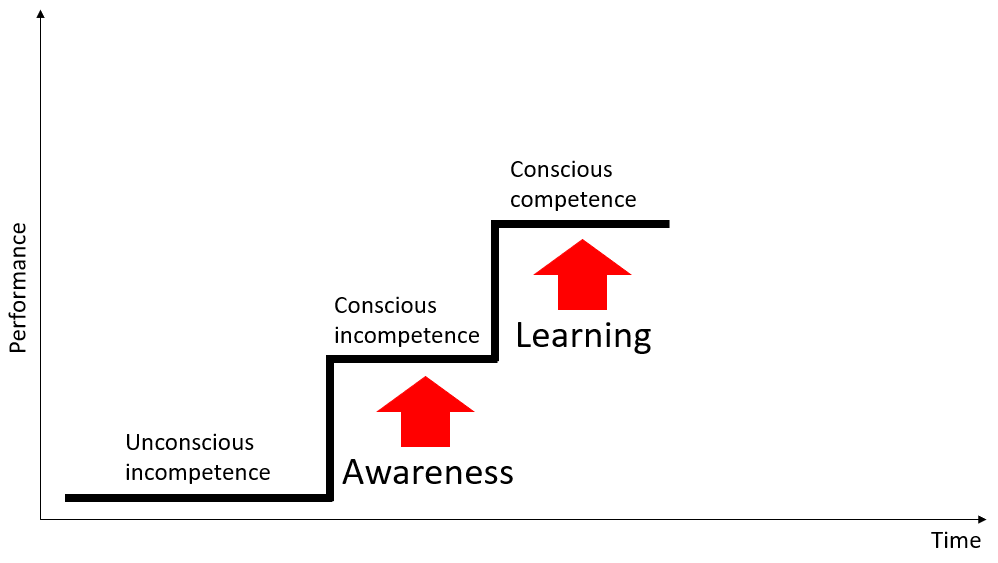
The four stages of competence, also known as the ‘conscious competence learning model’, describes the process of progressing from incompetence to competence in performing a task or activity. [1]

Stage 1. Unconscious incompetence

At this ‘unconscious incompetence’ stage, a person is unaware of their inability to perform a particular task or activity.

Stage 2. Conscious incompetence

At the ‘conscious incompetence’ stage, a person becomes aware that they are unable to perform a particular task or activity.

Stage 3. Conscious competence

A person who is aware of their incompetence may decide it is worth their time and effort to learn how to perform the particular task or activity. At the ‘conscious competence’ stage, the person can perform the task but they will require concentration and may need to think about each step.

Stage 4. Unconscious competence

In the final stage of ‘unconscious competence’, performing the task becomes second nature because the person has learnt and practiced performing the task so much. They can perform the task easily and without thinking about it. As a result, the task may be performed while executing another task.

An experienced or skilled worker often performs many work tasks and activities without needing to think about how or what to do.

Becoming conscious again

As a trainer, we often have mastered skills and we are no longer conscious about how we perform work tasks or activities. We just do it.

But as a trainer, we must explain and demonstrate to others how to perform work tasks, and to do this we have to again become conscious about the steps required to perform the task. The development of a task breakdown is a method that helps us become conscious again about how to perform a work task or activity.

A task breakdown is a step-by-step description about how to perform a task. It may also be known as a procedure or work instructions.

What is a task breakdown?

A ‘task breakdown’ is a document that breaks down a task. It describes the steps in a logical sequence to perform the particular work task or activity.

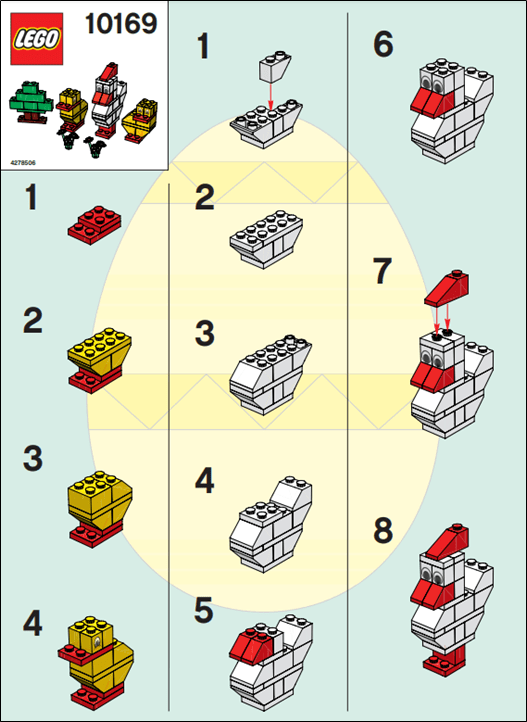
I use three analogies to help people understand and appreciate the value of a task breakdown: Lego instructions, Ikea instructions, and a cooking recipe.

The following three examples have three common features:

  • Steps are numbered
  • Illustrations are used to visually communicate
  • The outcome or desired result is shown.

Lego instructions

Ikea instructions

Cooking recipe

How can a task breakdown be developed?

Use the following six steps to develop a task breakdown.

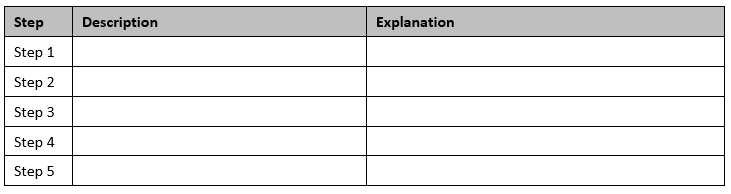
Step 1. Create 3-column table

Open a new Microsoft Word document and create a 3-column table. For example:

Step 2. Add table headings and adjust column width

The following illustrates the recommended layout and format for the task breakdown. For example:

Note: Layout and format can be modified later, if required.

Step 3. Enter step numbers

Use the first column to enter step numbers. The numbers imply a logical sequence to followed, and repeatedly use the word ‘step’ because this reinforces that each row is a step to be performed. For example:

Note: Table rows can be added or removed later, as required.

Step 4. Write brief description for each step

Perform the task or observe someone performing the task. Write a brief description for each step. For example:

Step 5. Write explanations

Write a clear and concise explanation for each step. Use illustrations, diagrams, and photos to show examples. Do not decorate or use unnecessary visuals. For example:

Important note: Remember to highlight safety requirements for the task or for a particular step.

Step 6. Review and finalise task breakdown

Ask someone to use your draft task breakdown to perform the task. Observe the person performing the task, checking the sequence of steps, and seek feedback about readability.

Check your task breakdown for grammar and spelling. Add task title, version control, and page numbers before finalising the document. For example:

Download the finished product

You can download a PDF version of the finished task breakdown for creating a task breakdown from here.

When can a task breakdown be used?

The task breakdown has multiple uses:

  • Used as a planning tool to identify required knowledge, required skills, safety requirements, and resources required to perform a task
  • Used to explain the process or performance of the task
  • Used to demonstrate the process or performance of the task
  • Used by the learner to guide them when they learn or practice performing the task
  • Used to check or assess the performance of the task
  • Used as a diagnostic tool when a person is struggling with learning or performing the task (used to identify what step the learner is stuck on).

Training session plan

A task breakdown describes a task. A session plan is used to describe the training to be delivered. The task breakdown should not make reference to the training process. It should only describes the work task or activity.

A training session plan can be developed based on the steps described by the task breakdown.

Observation checklist

A task breakdown can be converted into an observation checklist. For example:

A procedure that can be used in the workplace

A task breakdown should be written to guide performance of a work task or activity. It should describe the step-by-step procedure to be followed in a training environment or in a real workplace. The task breakdown should be the procedure to follow, no matter where the task is performed.

In conclusion

Creating a task breakdown is a basic skill that all trainers and TAFE teachers must have. A task breakdown describes the steps in a logical sequence to perform a particular work task or activity.

A task breakdown has a multitude of uses:

  • Used by the trainer as a planning tool
  • Used by the trainer when explaining and demonstrating the performance of the task
  • Used by the learner to guide them when they learn or practice performing the task
  • Used by the trainer when checking or assessing the performance of the task
  • Used by the trainer as a diagnostic tool.

Reference

[1] https://en.wikipedia.org/wiki/Four_stages_of_competence accessed 2 March 2023

Do you need help with your TAE studies?

Are you a doing the TAE40122 Certificate IV in Training and Assessment, and are you struggling with your studies? Do you want help with your TAE studies?

Ring Alan Maguire on 0493 065 396 to discuss.

Contact now!

logo otws

Training trainers since 1986